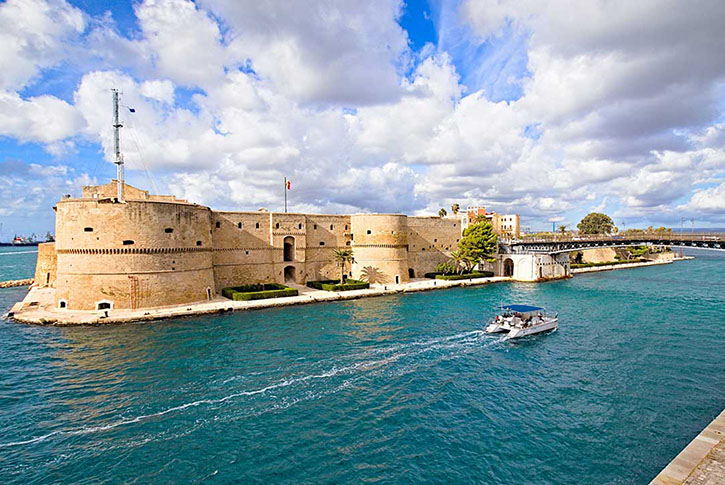
1. Morning in Taranto: The Day Begins
The day began early, just after sunrise. Taranto, still quietly waking up, felt calm and golden under the soft morning light. I opened the shutters to my balcony overlooking the old town’s rooftops—chipped tiles, laundry lines, sleepy alleys. There’s a rhythm to the mornings here. Seagulls cry out as fishermen prepare boats in the harbor, and the scent of warm bread drifts from the nearby panetteria.
After a quick espresso and a cornetto con crema at a small café near Via Duomo, I packed a day bag with essentials: water, snacks, my camera, and a light jacket. The plan was to explore beyond the city limits, taking in the rural charm, coastal serenity, and the quiet dignity of Apulia’s ancient towns. I had mapped out a circular route: first inland to the countryside near Crispiano, then down to the coast around Marina di Pulsano, and finally looping west to visit Grottaglie before returning to Taranto by evening.
2. Toward the Countryside: Crispiano and the “Hundred Farmsteads”
Driving out of Taranto in the soft morning haze, the landscape changed almost immediately. The urban edges fell away into olive groves, rolling pastures, and stone walls that have stood for centuries. The air smelled like dry earth, wild herbs, and dew evaporating in the sun.
Crispiano is known locally as the town of the “Cento Masserie”—a network of ancient farmsteads that date back hundreds of years. Some are abandoned, overgrown with ivy and wildflowers, while others have been restored into agriturismos. I stopped at Masseria Quis Ut Deus, not for a stay, but to wander its grounds and meet the family who has owned it for generations. The structure was thick-walled, whitewashed, with an internal courtyard shaded by a giant fig tree. Chickens pecked in the dust. A shepherd passed by with his flock at the far edge of the field.
The owner, a soft-spoken man named Giovanni, invited me for a short walk into the olive groves behind the farmstead. The trees here are centuries old—gnarled, stooped, like ancient dancers frozen mid-move. He told me that his family had been pressing oil here since the 1700s, and handed me a small bottle as a parting gift. The warmth of the encounter stayed with me.
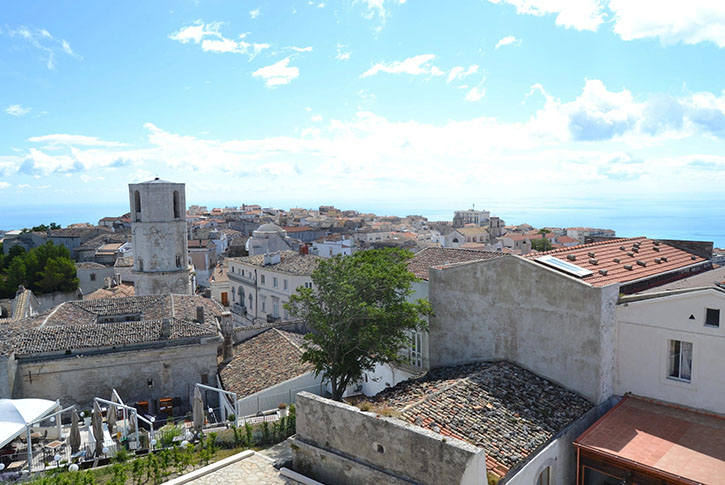
3. A Quiet Detour: Church of Santa Maria della Neve
Before leaving Crispiano, I made a quick detour to a little-known site that I’d marked down in my notes weeks ago—the Chiesa di Santa Maria della Neve, a small rural church tucked in the hills. There were no signs, no tourists, only the whisper of wind in the trees. The church itself was simple and worn by time, its stone façade rough, its door half-open.
Inside, faint frescoes still clung to the walls—delicate blues and reds, faded by sun and centuries. The air was cool, almost damp, and smelled of candle wax and limestone. I sat there for a few minutes in silence, letting the stillness of the space wrap around me. It’s easy to forget how powerful quiet can be until you step away from the noise of modern life.
4. Midday on the Coast: Marina di Pulsano and the Blue of the Ionian
From Crispiano, I headed southeast toward the sea. The drive through the countryside gave way to glimpses of shimmering water as I approached Marina di Pulsano. By the time I reached the beach, the sun was high and the Ionian Sea was dazzling—deep turquoise near the horizon, turning transparent green near the shore.
I parked near Spiaggia di Montedarena, one of the more secluded beaches in the area. The sand here is fine and golden, and the beach curves gently, cradled between low limestone cliffs. I kicked off my shoes and walked the shoreline, letting the warm water wash over my feet. Families had begun to arrive, setting up umbrellas and unpacking coolers. Children squealed with joy as they splashed into the surf. I found a quiet spot near a cluster of rocks and lay down on a towel, the sun on my face and the rhythmic pulse of the waves filling my ears.
After a swim, I walked up to a small beachside bar—a weathered wooden shack painted white and blue. I ordered a chilled Peroni, a plate of fried anchovies, and a salad of local tomatoes, burrata, and fresh oregano. It was one of those meals that tastes better simply because of where you are. The salt on my skin, the sound of seagulls, the hum of a summer afternoon—it all seemed to enhance every bite.
5. Wandering Through Time: The Ceramics of Grottaglie
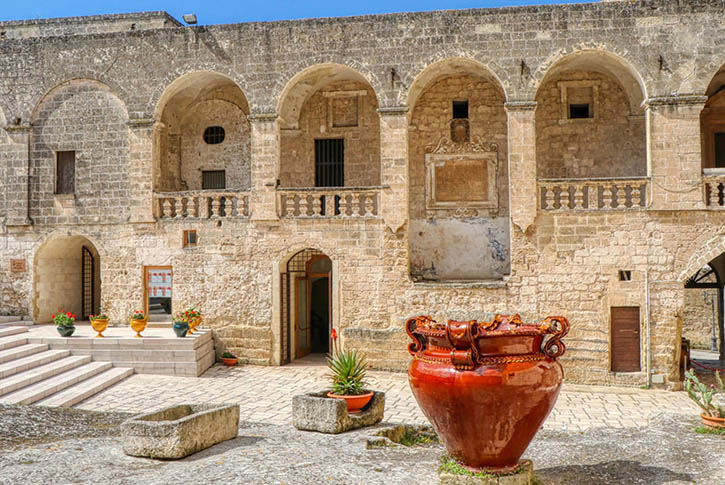
By late afternoon, I left the coast behind and drove northwest toward Grottaglie, a town famed for its ceramic traditions. As the car wound through olive country once more, I passed vineyards, fig orchards, and stretches of dry, cracked earth. The sun was beginning to dip, casting everything in a golden light.
Grottaglie sits on the slope of a hill, its older streets still paved in stone, flanked by small homes with flower boxes and laundry strung across narrow alleys. I parked near the Quartiere delle Ceramiche, a historic district packed with artisan workshops. The sound of pottery wheels and the smell of clay filled the air.
I wandered into several studios, watching as craftsmen shaped vases, plates, and the traditional pumi—rounded ceramic buds that symbolize prosperity and renewal. One potter, an elderly woman with flour-white hands, showed me how she paints each piece with intricate patterns passed down from her grandmother. I bought a small ceramic olive oil jug glazed in sea-green and ochre, its shape smooth and balanced.
Just before leaving, I climbed up to Castello Episcopio, the medieval fortress that overlooks the town. The view from the ramparts stretched far across the valley, all the way to the sea. The rooftops below glowed in the last light of day, and I sat for a while as the first stars appeared.
6. A Pause Beneath the Trulli: Aperitivo in Martina Franca’s Outskirts
On a whim, I took a detour to the edge of Martina Franca, another hilltop town famous for its Baroque architecture and food markets. I didn’t have time to venture into the city center, but I stopped at a small trattoria tucked between trulli houses—those iconic conical-roofed dwellings unique to this part of Apulia.
The place was modest, family-run, with outdoor tables set beneath a pergola of grapevines. I ordered an aperitivo: a glass of local Verdeca wine and a few snacks—olives, slices of pecorino, and crispy taralli. Around me, people laughed in dialect, an old dog dozed beneath a table, and somewhere in the fields beyond, a tractor hummed its way home.
It was the kind of pause that makes a day feel full—unhurried, grounded, touched by the beauty of small things.
7. Return to Taranto: Evening by the Canals
By the time I returned to Taranto, the sky was darkening, and lights were flickering on along the canals. I drove slowly across the Ponte Girevole, the swing bridge that links the new and old cities. Boats bobbed quietly in the water, and the scent of salt and grilled seafood floated through the streets.
I walked the length of Corso Vittorio Emanuele, stopping to admire the faded grandeur of the palazzi and the quiet elegance of the lungomare. The sound of a violin echoed from a nearby square. I followed it and found a young man playing under a streetlamp, his case open for coins. I stayed for a few songs, then continued on, drawn by the aroma of food.
Dinner was at a local osteria recommended by a friend. The interior was dim, cool, and lined with shelves of wine. I ordered orecchiette with cime di rapa and a grilled fish of the day—sea bream, caught just that morning. Every bite carried the flavors of the region—simple, fresh, rooted in tradition.
I lingered for a long time, sipping a small glass of amaro and listening to the quiet conversations around me.
+ There are no comments
Add yours