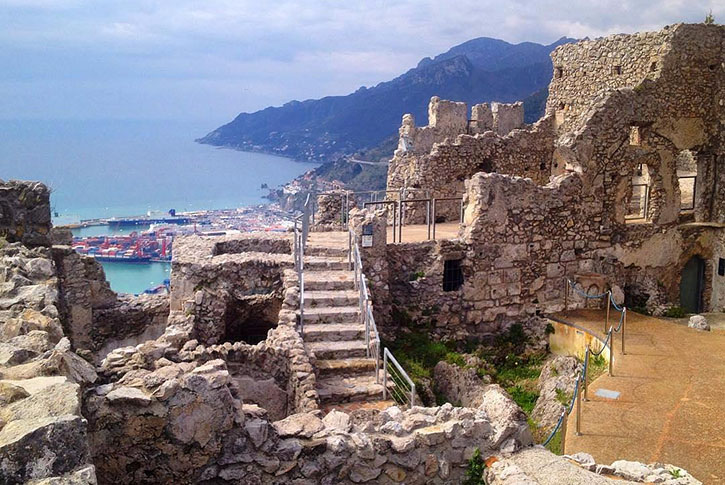
1. Arrival in Salerno: The Gateway to the Amalfi Coast
Salerno greets its visitors with a kind of quiet dignity. Nestled on the southeastern edge of the Amalfi Coast, it is often overlooked in favor of Positano’s pastel cliffs or Ravello’s cliffside terraces. Yet, there’s something about Salerno that feels unfiltered and intimate—less performative, more grounded.
I arrived by train, having boarded the Frecciarossa from Rome Termini to Salerno Centrale. The journey took just over two hours. Stepping off the platform, I was welcomed by that subtle scent of sea salt that always floats near Mediterranean towns. The station opens toward the heart of the city, where Vespas dart around limestone fountains and narrow streets buzz with conversations in melodic dialect.
After grabbing a quick espresso doppio from a café on Via Giuseppe Mazzini, I took a taxi toward the hills above the city, climbing the winding road to my accommodation for the night—Castello di Arechi.
2. A Castle in the Sky: Discovering Castello di Arechi
Perched 300 meters above sea level, Castello di Arechi offers panoramic views of the Gulf of Salerno. The location is not just picturesque—it is commanding. The road curves like a ribbon around the hillside, hemmed in by chestnut groves and fragments of medieval stone. There is a tangible stillness that surrounds this elevation, as if time hesitated before entering.
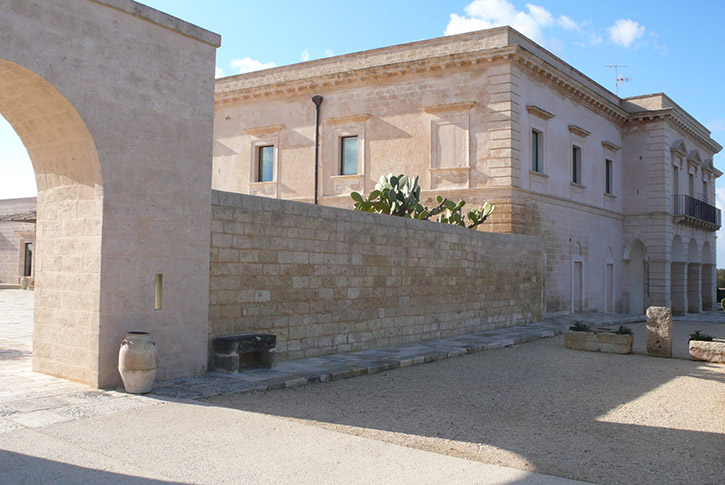
Castello di Arechi isn’t just a hotel—it’s a relic. Built during the 8th century under the Lombard Duke Arechi II, the castle once functioned as a strategic military fortification. Its walls are built of rusticated stone, thick and moss-scented. The sense of history isn’t fabricated or adorned for Instagram—it breathes through every weathered stone and iron torch fixture.
The section of the castle that serves as a boutique hotel has been restored with remarkable fidelity. While the original fortress structure now operates primarily as a museum and event space, a secluded annex, lovingly renovated by a local preservationist family, has been converted into a small, luxury guesthouse.
3. Booking the Experience
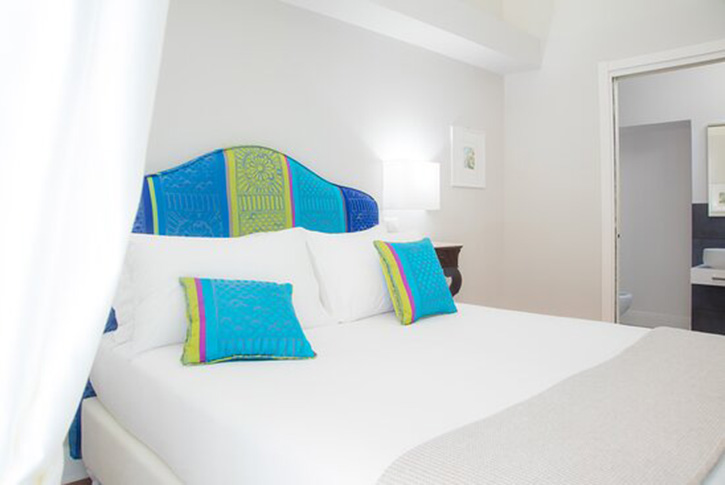
I found Castello di Arechi’s guest accommodations on Relais & Châteaux, a platform that often features restored heritage properties and intimate boutique lodgings across Europe. The listing was titled “Relais Arechi – Historic Castle Lodging”, and I was immediately drawn in by the authenticity of the photographs—stone vaults, terracotta floors, and a bedroom window framing the Tyrrhenian Sea.
The booking was straightforward. One night in the “Camera Torre” (Tower Room) cost €395, including breakfast and a private evening tour of the castle grounds. There was a small local tax of €3.50 added on arrival. I booked approximately three weeks in advance, which I would recommend, especially in the spring and summer seasons when weddings frequently reserve the castle’s courtyard.
4. Check-In Under the Arches
The entrance is a heavy oak door with a lion-head knocker. I was greeted by Claudia, one of the owners’ daughters, who handed me an iron key so large it could’ve opened a treasure chest. No plastic keycards here. She led me through a small courtyard lined with lavender, then up a winding stone staircase into the main living quarters.
There’s no traditional lobby. Check-in is done at a carved wooden desk near a fireplace that was already smoldering despite the mild April air. The fire added not heat, but ambiance. Claudia handed me a leather-bound booklet that detailed the castle’s history, as well as a hand-drawn map indicating which doors and passages were accessible to guests.
She spoke softly, almost reverently, when referring to the tower suite I’d reserved. “It is the oldest room in the complex. It was once the watchmen’s quarters. You’ll notice the slit windows—they were made for arrows, not light.”
5. The Tower Room: Time Travel with Modern Comforts
The room was accessible via a private spiral staircase. Each step was worn in the center from centuries of footfall. At the top, a solid wood door opened to the Torre suite.
Inside, the atmosphere shifted. Arched ceilings loomed above with crossbeams still bearing hand-forged nails. The walls were left largely unadorned—rough-hewn limestone that seemed to glow in the ambient lighting. A narrow window opened toward the Gulf, revealing Salerno’s lights flickering far below.
The bed was a four-poster with iron filigree, draped in cream linens. There was a small writing desk beside it, equipped with parchment-style stationery, a fountain pen, and a bottle of local Falanghina wine with two glasses. No television. No electronics. The only sounds were wind against the walls and, later, the distant chime of the cathedral bell from the valley below.
The bathroom was a pleasant contrast to the medieval austerity—a heated floor, rainfall shower, locally sourced olive oil toiletries, and thick, embroidered towels bearing the Arechi crest.
6. Dinner Beneath the Vaults
Dinner was not part of the room rate but was available for €60 per person. The castle has no public restaurant, but the family offers an in-house chef experience for guests upon request. I had pre-ordered the meal during booking and selected a traditional Campanian menu.
I was led to the candlelit former armory, now set with two tables dressed in white linen. I was the only guest dining that night.
Antipasto was a selection of local cured meats, smoked provola, and marinated vegetables served with warm pane cafone. The pasta course—scialatielli ai frutti di mare—was the highlight: thick, hand-rolled pasta with clams, mussels, and shrimp in a garlicky white wine broth.
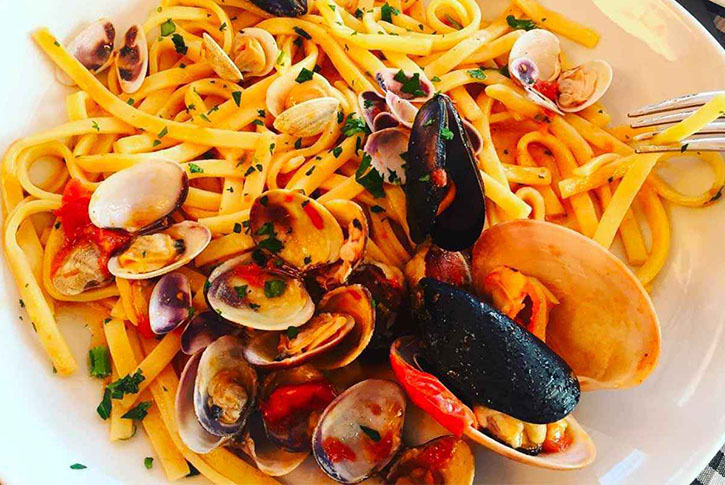
The secondo was agnello al forno—slow-roasted lamb with rosemary and potatoes, followed by a lemon ricotta cake topped with candied orange peel.
The chef, Giovanni, introduced each dish personally. He spoke little English but had the expressive cadence of someone who cooks from instinct rather than recipes.
7. An Evening Walk Through Centuries
After dinner, Claudia returned to guide me through parts of the castle typically closed to the public. We walked by torchlight (literal torches) along the ramparts. The moon cast long shadows through crenellations, and from that elevation, the sea seemed unnaturally still.
We paused in a former chapel where fragments of frescoes still clung to the walls. A single candle flickered on the altar. Claudia explained how weddings still take place here, often followed by banquets in the Great Hall below.
Before returning to my room, she showed me a library tucked behind a hidden panel—a small collection of 18th- and 19th-century volumes, most in Latin or Old Italian. I sat there for a while, leafing through a 1793 edition of Historia Longobardorum.
8. A Dawn Like No Other
Sleep came easily. There was a deep, womb-like silence within those walls. At 5:45 a.m., I awoke naturally. A single shaft of light broke through the window slit, illuminating the stone walls with a soft gold hue.
I stepped out onto the battlements with a blanket draped over my shoulders. The sea below was wrapped in mist, with only the tops of the distant Cilento hills poking through. The city was still asleep. Even the seagulls held their breath.
Breakfast was served in a side chamber—fresh cornetti filled with fig jam, buffalo ricotta, hand-squeezed blood orange juice, and dark, bitter coffee. A simple meal, but one that anchored the morning with warmth and clarity.
9. Departure from the Heights
By 10 a.m., it was time to descend. Claudia helped me with my bag and arranged for the castle’s driver to take me back to Salerno Centrale. The ride down was quiet. The city below, now fully awake, looked different from that elevation—more bustling, almost loud. The spell of the castle still lingered as we wound our way back into the modern day.




+ There are no comments
Add yours